nanobubbles;
invisible
massive in impact

Powered by their ultra-fine size, high energy potential, and superior diffusivity, nanobubbles unlock exceptional performance and drive transformative impact across a wide range of industries.

DEFINITION OF NANO BUBBLE

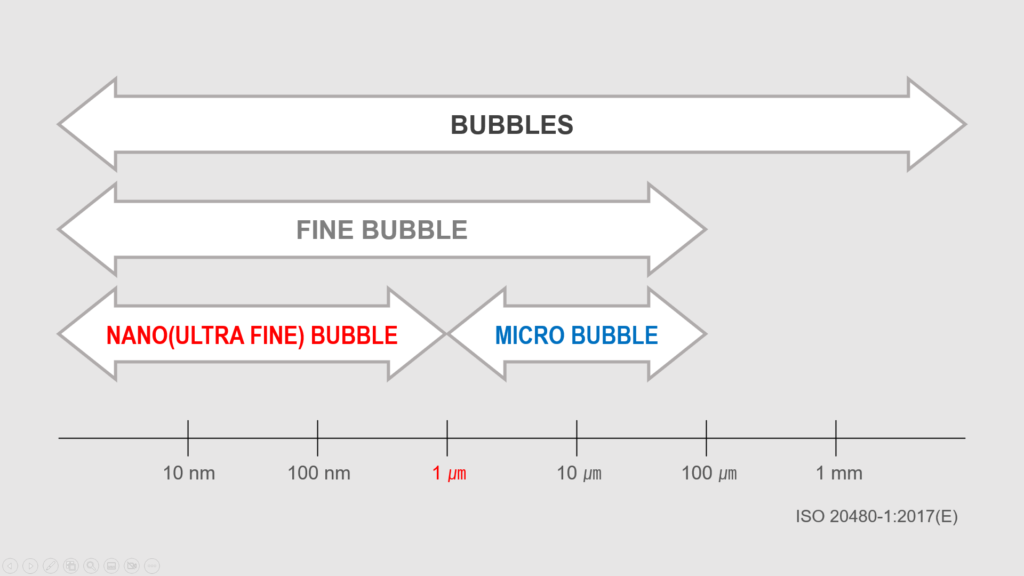
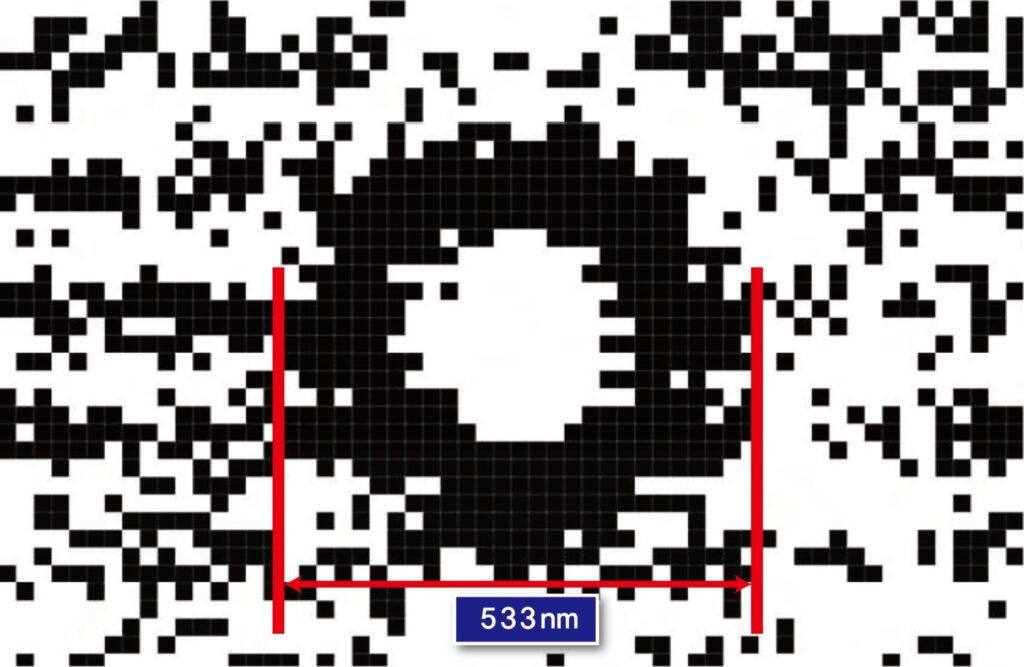
Nano Bubble is ‘very small bubble with a volume equivalent diameter of less than 1 μm’ , also called ‘ultra-fine bubble’.

Nano Bubble has unique physical and chemical properties and are superior to other aeration methods. Therefore nanobubble technology is used in a variety of applications, including water treatment, agriculture, aquaculture, food processing, and other industrial areas.

Image. Definition of Nano Bubble
  • Very small bubble with a volume equivalent diameter of less than 1 μm
  • Invisible to the naked eye
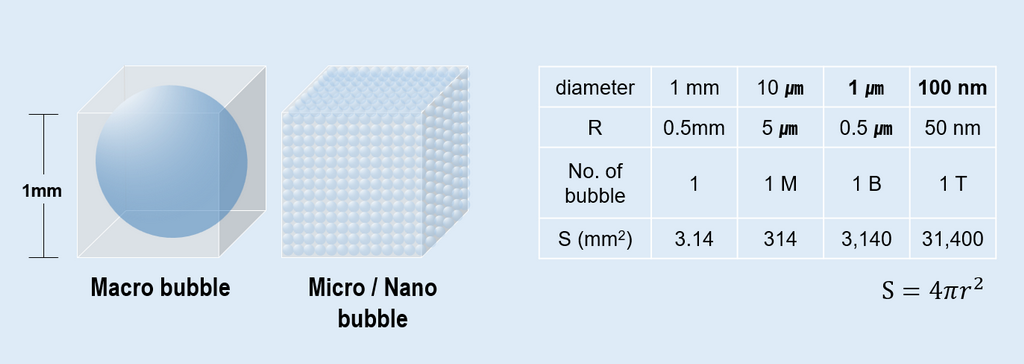
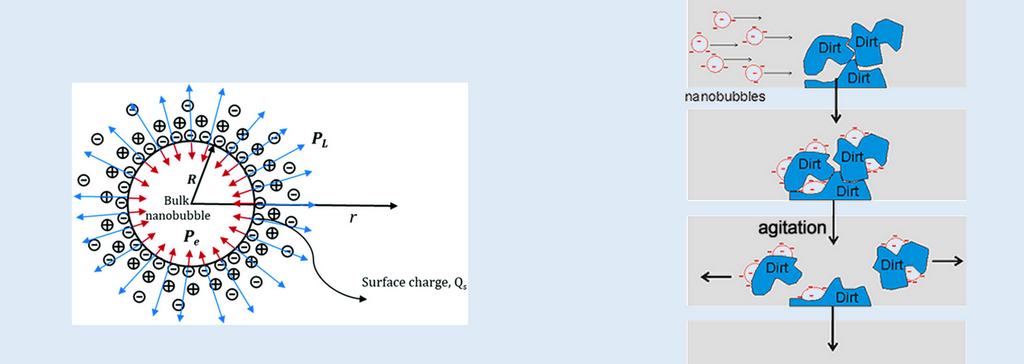
  • Large Surface Area
  • Brownian Motion
  • High Gas Solubility
  • Strong Surface Charge

NANOBUBBLE GENERATION METHOD

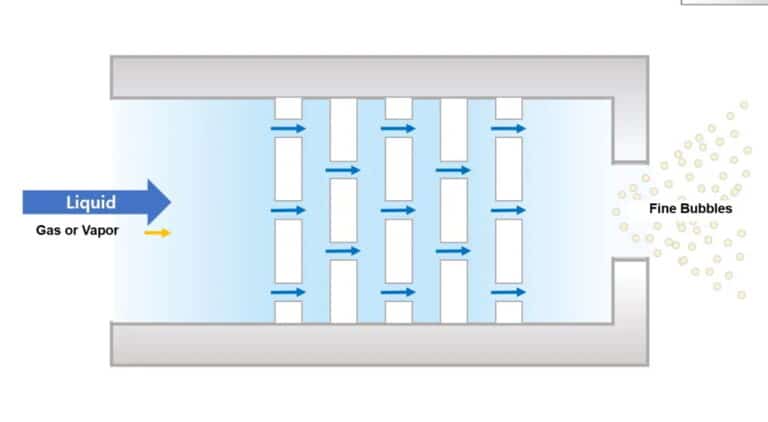
There are many different technologies for generating nanobubbles. Some of the well-known and common methods are as follows.

Image. Nano Bubble Generating Method

PROPERTIES OF NANOBUBBLES

Nanobubbles have unique physical and chemical properties and are superior to other aeration methods. Therefore nanobubble technology is used in a variety of applications, including water treatment, agriculture, aquaculture, food processing, and other industrial areas.

Large Surface Area

Nanobubbles have a high surface area to volume ratio, allowing for a greater amount of gas to be in contact with water. This, combined with their ability to remain suspended in water due to their small size and high buoyancy, results in increased gas transfer efficiency between the gas and water phases.

Brownian Motion

Nanobubbles stay in the water for a long time. This unique feature enables nanobubbles to provide a homogenous distribution of oxygen throughout an entire body of water. And Dissolved oxygen level is maintained for very long time.

High Oxygen Transfer Efficiency

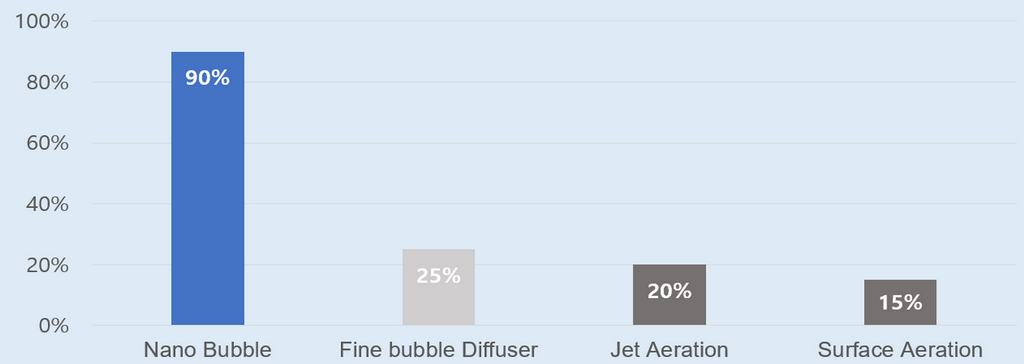
Nanobubble can efficiently deliver oxygen into water due to the very large surface area and their Brownian motion. Oxygen transfer efficiency with nanobubble is reached to around 90%.

Surfacecharge

Nanobubble has a strong surface charge. This negative charge improves separation efficiency in floating process. This feature float more suspended matter than through conventional methods in the wastewater, oil and gas operators.

BENEFITS OF NANOBUBBLES

Due to the various inherent physical properties of nanobubbles, the ability to transfer gas to liquid is very high, and thus has the following advantages.

Improved Water Treatment

Nanobubbles can effectively remove organic pollutants, bacteria, and other contaminants from water, resulting in cleaner and safer water for consumption and industrial use.

Enhanced Agriculture and Aquaculture

Supplying oxygen nanobubbles to plants and aquatic organisms can improve their growth, health, and resilience. Nanobubbles can also enhance nutrient absorption, reduce the need for pesticides and other chemicals, and improve crop yields.

More Efficient Cleaning

Nanobubbles can penetrate surface pores and crevices, providing a more thorough cleaning that is effective against stubborn dirt and grime. This can result in less cleaning time, less water consumption, and less need for harsh chemicals.

Enhanced Oil and Gas Recovery

Nanobubbles can increase the efficiency of oil and gas recovery by improving the flow of fluids and reducing the amount of chemicals needed in the process.

Improved Skin and Hair Health

Nanobubbles can help enhance the absorption of skincare products, leading to healthier skin. They can also improve hair texture and reduce dandruff by providing deeper cleansing.

WHERE NANO BUBBLE TECHNOLOGY IS USED

Nano bubble technology is used in various fields such as water treatment and purification, agriculture, aquaculture, food and beverage processing, and sanitation. It can improve dissolved oxygen levels, increase gas transfer efficiency, enhance chemical reactions, and provide a platform for drug delivery and diagnostics in medical applications.

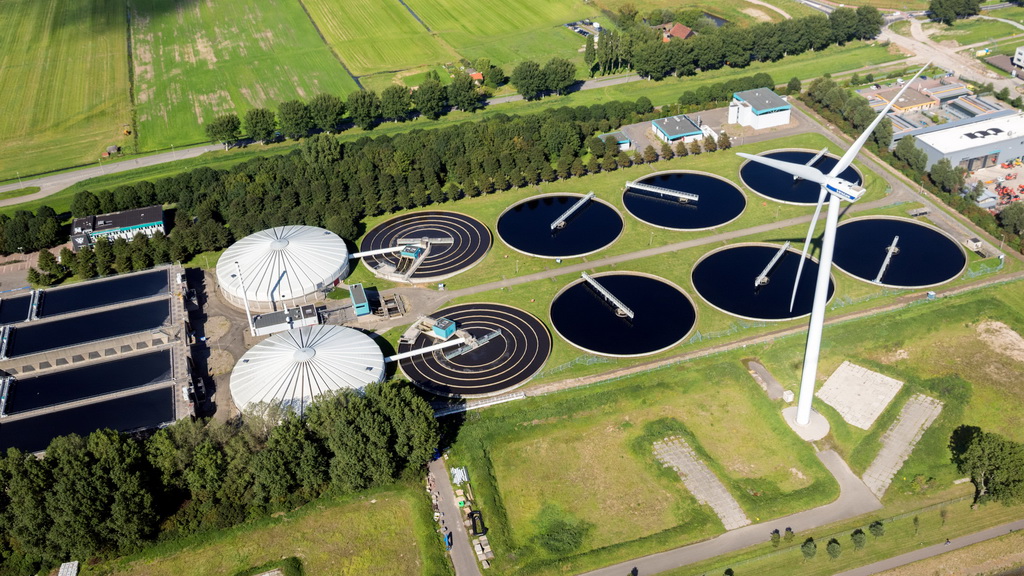
Improved Water Treatment

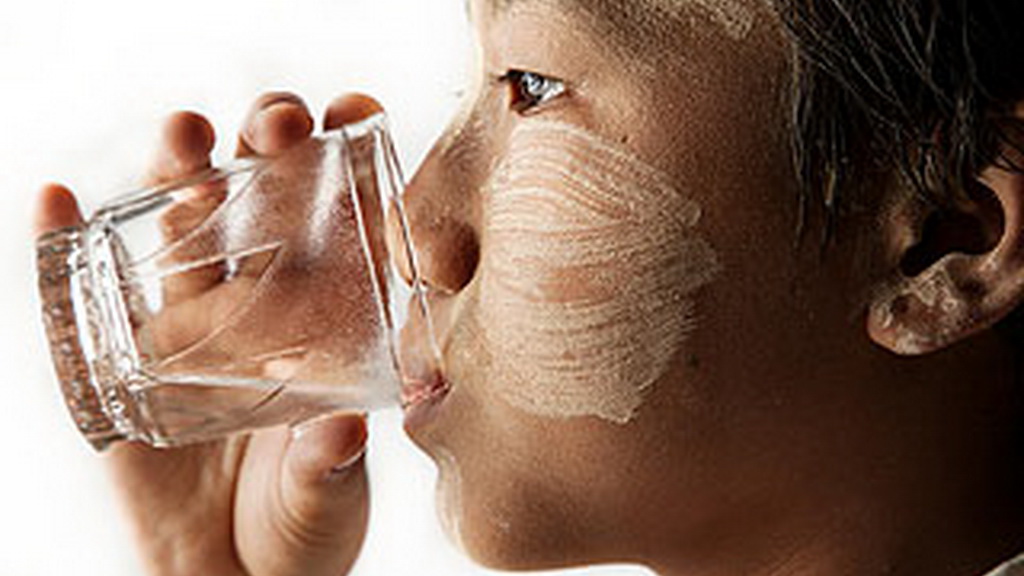
Drinking Water Purification

Image. Drinking Water Treatment

Agriculture

Aquaculture

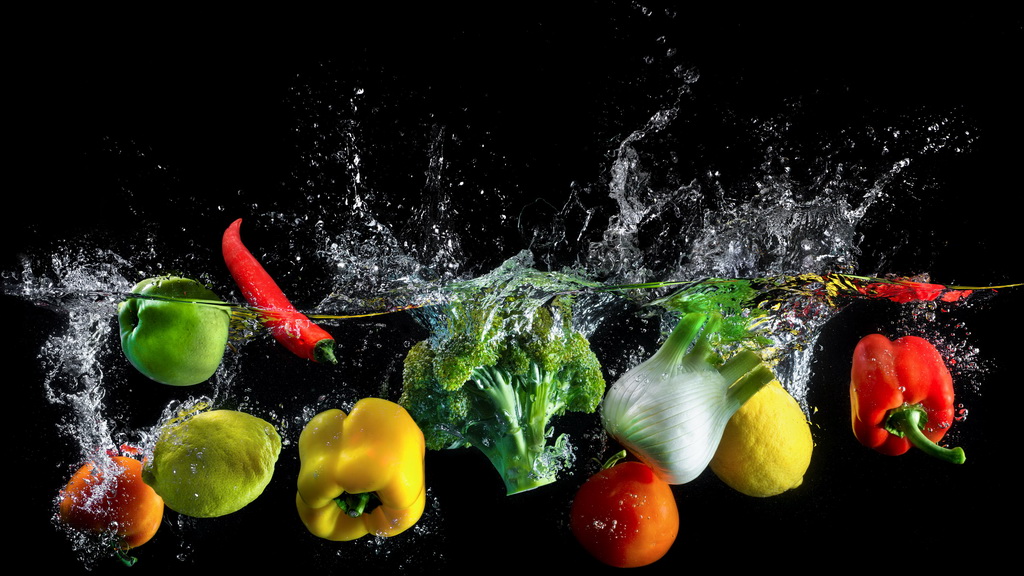
Food Processing

Other Industries